
Aqua Jogging & Pool Walking: The Low-Impact Cardio You’re Missing
Aqua Jogging & Pool Walking: The Low-Impact Cardio You’re Missing
What if you could get a challenging cardio workout that burns serious calories while being incredibly gentle on your joints?
Aqua jogging and pool walking offer exactly that combination—and they’re far more effective than most people realize.
Whether you’re recovering from injury, looking for a joint-friendly alternative to running, or simply want to add variety to your fitness routine, water-based cardio deserves a closer look.
At Delta Valley Health Club, our heated indoor Olympic lap pool provides the perfect environment for aqua workouts year-round.
Let’s dive into everything you need to know about aqua jogging and pool walking—from calorie burn to technique to getting started.
How Many Calories Does Aqua Jogging Burn?
The calorie burn from aqua jogging often surprises people who assume water exercise is easy. In reality, water provides 12 to 15 times more resistance than air, meaning your muscles work significantly harder with every stride.
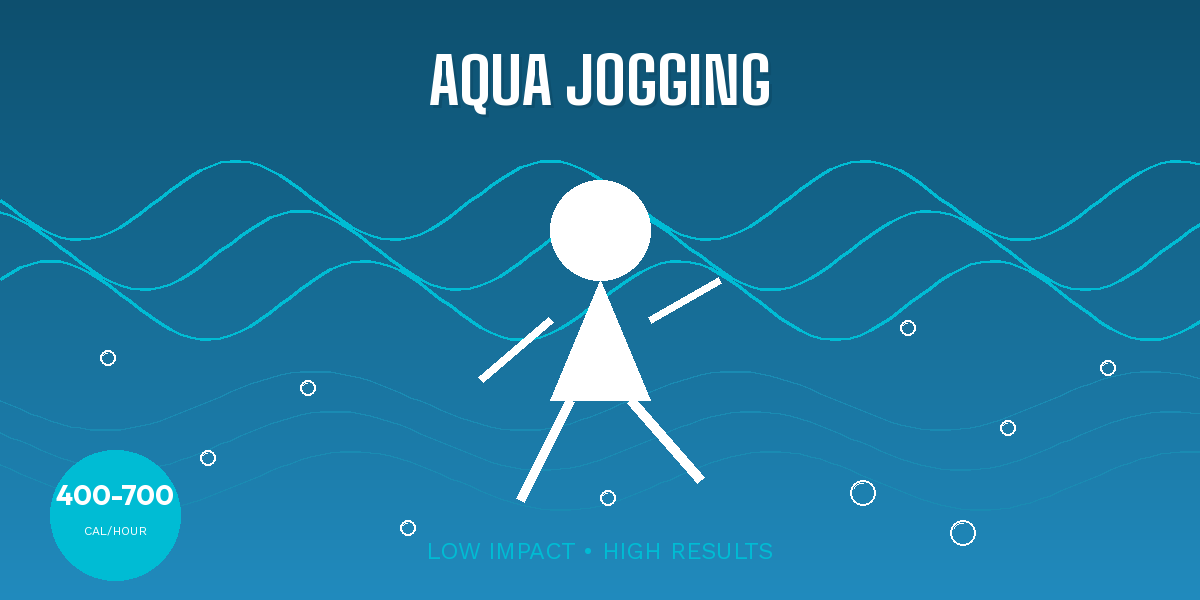
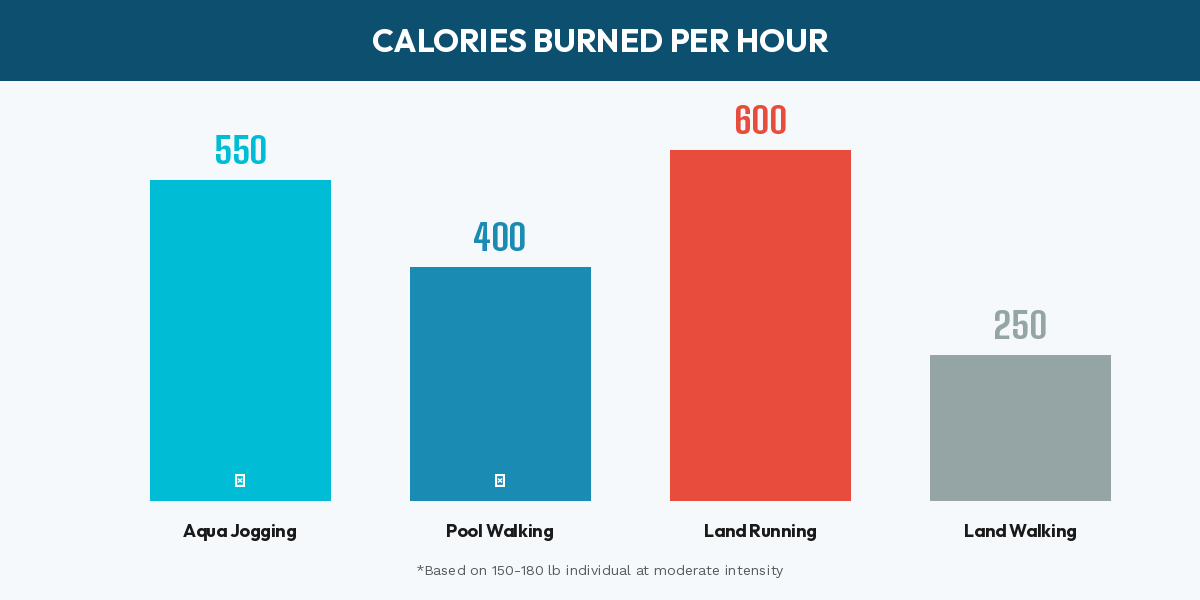
Research indicates that aqua jogging can burn between 400 and 700 calories per hour, depending on intensity, body weight, and water temperature.
Here’s what makes those numbers particularly impressive: you’re achieving that calorie burn with virtually zero impact on your joints.
For comparison, running on land burns roughly 500 to 700 calories per hour but comes with repetitive stress on your knees, hips, and ankles.
Aqua jogging delivers comparable metabolic benefits without the wear and tear.
If you’re curious about how this compares to other water-based activities, our article on calories burned in water aerobics provides additional context on aquatic exercise energy expenditure.
Pool Walking Calories: What to Expect
Pool walking—walking in waist-deep to chest-deep water—burns approximately 300 to 500 calories per hour.
While that’s less than aqua jogging, it’s substantially more than walking on land, which typically burns around 200 to 300 calories hourly at a moderate pace.
The water resistance transforms a simple walk into a legitimate strength and cardio workout.
The depth of the water significantly affects intensity.
Walking in chest-deep water requires more effort than walking in waist-deep water because you’re pushing against more resistance with each step.
Many people start in shallower water and progress to deeper sections as their fitness improves.
For those wondering if water aerobics is good for weight loss, pool walking provides an excellent entry point into aquatic fitness with meaningful calorie burn and zero intimidation factor.
The Science Behind Water Resistance Training
Understanding why water exercise is so effective helps appreciate its value.
Water creates resistance in all directions—something you simply can’t replicate on land without machines. Every movement becomes a strength exercise because your muscles must push against the water constantly.
This omnidirectional resistance means you’re working opposing muscle groups simultaneously.
When you push your leg forward against the water while aqua jogging, you’re engaging your quadriceps.
When you pull it back, your hamstrings and glutes activate. This balanced muscle engagement helps prevent the imbalances that often develop from land-based exercise.
Additionally, the hydrostatic pressure of water improves circulation and can reduce swelling and inflammation.
Athletes and physical therapists have long recognized these benefits, which is why aquatic exercise features prominently in rehabilitation programs worldwide.
Benefits of Aqua Jogging and Pool Walking
Joint Protection
Water’s buoyancy reduces your effective body weight by up to 90 percent when submerged to chest level.
This means someone weighing 180 pounds experiences joint loading equivalent to just 18 pounds.
For individuals with arthritis, joint injuries, or excess body weight, this reduction makes vigorous exercise possible when it might otherwise be too painful.
Cardiovascular Conditioning
Aqua jogging and pool walking effectively train your cardiovascular system.
Studies show that heart rate responses during deep water running closely mirror those during land running at similar perceived exertion levels. You can achieve the same cardiovascular training effect while eliminating impact stress entirely.
Muscle Strengthening
The constant resistance provided by water makes every aquatic workout a strength training session.
Unlike land exercise where gravity only pulls downward, water resists movement in every direction. This comprehensive resistance helps build muscular endurance and tone throughout your entire body.
Recovery Enhancement
Many athletes use aqua jogging as active recovery between intense training sessions.
The combination of light movement and hydrostatic pressure promotes blood flow to fatigued muscles without adding training stress.
Elite runners frequently incorporate pool running into their programs, especially when managing minor injuries or heavy training loads.
Speaking of recovery, timing your workouts around other treatments matters. Learn more about working out after a massage to optimize your recovery schedule.
Proper Aqua Jogging Technique
Effective aqua jogging requires attention to form. Poor technique reduces effectiveness and can lead to muscle strain. Here’s how to do it right:
Body Position: Maintain an upright posture with a slight forward lean—similar to your land running stance. Avoid the common mistake of leaning too far back, which shifts effort away from your running muscles.
Arm Movement: Swing your arms naturally as you would when running, with elbows bent at roughly 90 degrees. Your arms should move in opposition to your legs—right arm forward with left leg, and vice versa.
Leg Action: Drive your knees up and extend your legs fully through each stride. Focus on mimicking your natural running gait rather than bicycle-pedaling motions. Your feet should flex and point through the movement.
Cadence: Aim for a turnover rate similar to your land running cadence—typically 160 to 180 strides per minute. Using a waterproof fitness tracker or counting your steps can help maintain appropriate intensity.
Pool Walking Techniques for Maximum Benefit
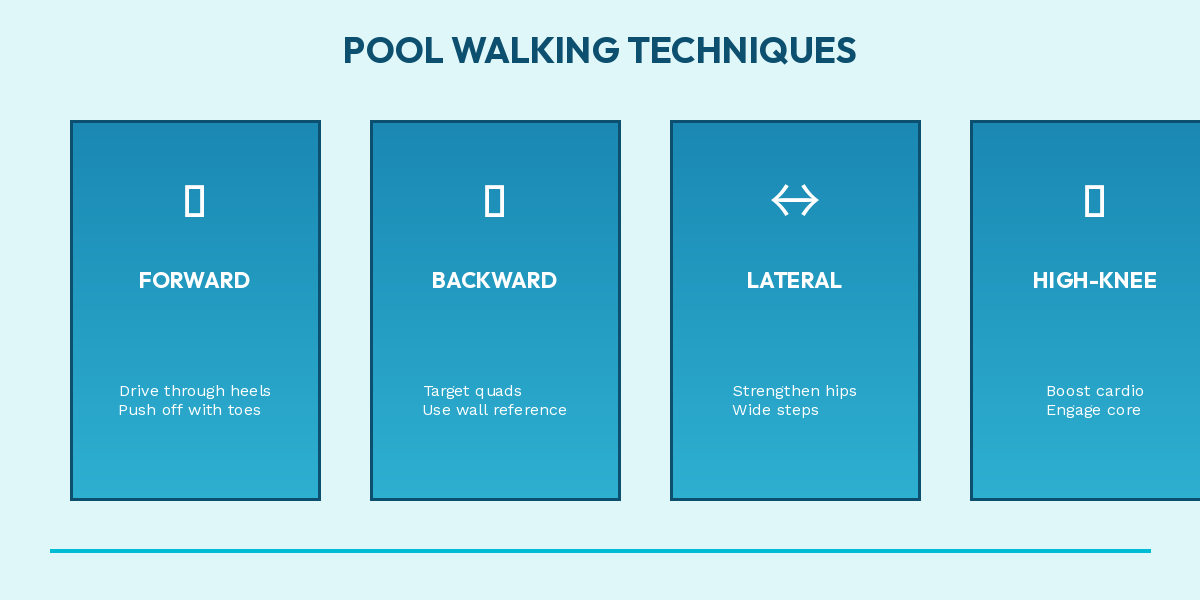
Pool walking seems simple, but intentional technique dramatically increases its effectiveness. Here are proven methods to maximize your pool walking workouts:
Forward Walking: Walk with an exaggerated stride, driving through your heels and pushing off with your toes. Keep your core engaged and maintain upright posture. Pump your arms actively to engage your upper body.
Backward Walking: Walking backward in the pool targets your quadriceps and hip flexors differently than forward walking. Start slowly and use the pool edge for reference to maintain a straight path.
Lateral Walking: Side-stepping through the water strengthens your hip abductors and adductors—muscles that stabilize your pelvis during land activities. Take wide steps and keep your toes pointed forward.
High-Knee Walking: Lifting your knees high with each step increases cardiovascular demand and engages your core more intensely. This variation also improves hip flexor strength and mobility.
Equipment for Aqua Jogging
While you can aqua jog without any equipment, certain tools enhance the experience and effectiveness of your workout.
Flotation Belt: A buoyancy belt keeps you upright in deep water, allowing you to focus entirely on your running mechanics without worrying about staying afloat. This is essential for deep water running and highly recommended for beginners.
Water Dumbbells: Foam dumbbells add upper body resistance to your pool walking or jogging routine. Unlike land weights, these create resistance when pushed through the water in any direction.
Waterproof Fitness Tracker: Monitoring your heart rate during aquatic exercise helps ensure you’re working at appropriate intensity levels. Many modern fitness watches are swim-proof and track pool workouts accurately.
Who Benefits Most from Aquatic Cardio?
While anyone can benefit from aqua jogging and pool walking, certain groups find these exercises particularly valuable:
Runners managing injuries: Aqua jogging maintains cardiovascular fitness and running-specific muscle engagement while injured tissues heal. Many runners have returned from injury faster by incorporating pool running during recovery.
Individuals with arthritis: The buoyancy and warmth of pool water reduce joint pain while allowing meaningful exercise. Many arthritis patients find they can exercise longer and more comfortably in water than on land.
People carrying extra weight: Water supports body weight, reducing joint stress that might otherwise make exercise uncomfortable or risky. This allows individuals to work at higher intensities safely.
Pregnant women: The support and cooling effect of water make pool exercise particularly comfortable during pregnancy. Of course, always consult with your healthcare provider about exercise during pregnancy.
Seniors: The fall risk present in many land exercises essentially disappears in the pool. Older adults can challenge themselves physically with minimal injury risk.
Sample Aqua Jogging Workout
Ready to try aqua jogging? Here’s a 30-minute workout suitable for beginners:
Warm-up (5 minutes): Easy pool walking to acclimate to the water temperature and loosen up your muscles.
Main Set (20 minutes): Alternate between 2 minutes of moderate aqua jogging and 1 minute of easy pool walking. Repeat this pattern throughout the main set. Focus on maintaining good form rather than speed.
Cool-down (5 minutes): Gentle pool walking with some static stretching using the pool wall for support.
As your fitness improves, extend the jogging intervals and reduce the walking breaks. Advanced aqua joggers often complete continuous 45 to 60-minute sessions with interval variations for intensity.
Combining Water and Land Training
Aqua jogging and pool walking work best as part of a comprehensive fitness program.
Consider using water workouts for active recovery days between higher-intensity land training. If you’re following a HIIT training program, pool sessions on off-days maintain fitness while allowing your body to recover from high-impact work.
For runners specifically, replacing one or two weekly runs with aqua jogging reduces cumulative impact stress while maintaining aerobic fitness.
This strategy is particularly valuable during high-mileage training phases or when minor aches suggest the need for reduced impact.
Start Your Aquatic Fitness Journey at Delta Valley
Our heated indoor Olympic lap pool at Delta Valley Health Club provides the perfect environment for aqua jogging and pool walking throughout the year.
The consistent water temperature and ample space make it easy to establish a regular aquatic exercise routine regardless of weather or season.
Beyond open pool access, we offer swim programs for all ages and skill levels.
If you’ve never been comfortable in the water, our instructors can help you build the confidence needed to enjoy aquatic fitness.
Ready to experience the benefits of low-impact, high-reward aquatic exercise? Visit our Brentwood or Discovery Bay location to see our pool facilities firsthand.
Your joints will thank you for making the switch—and you might be surprised by just how challenging a water workout can be.